
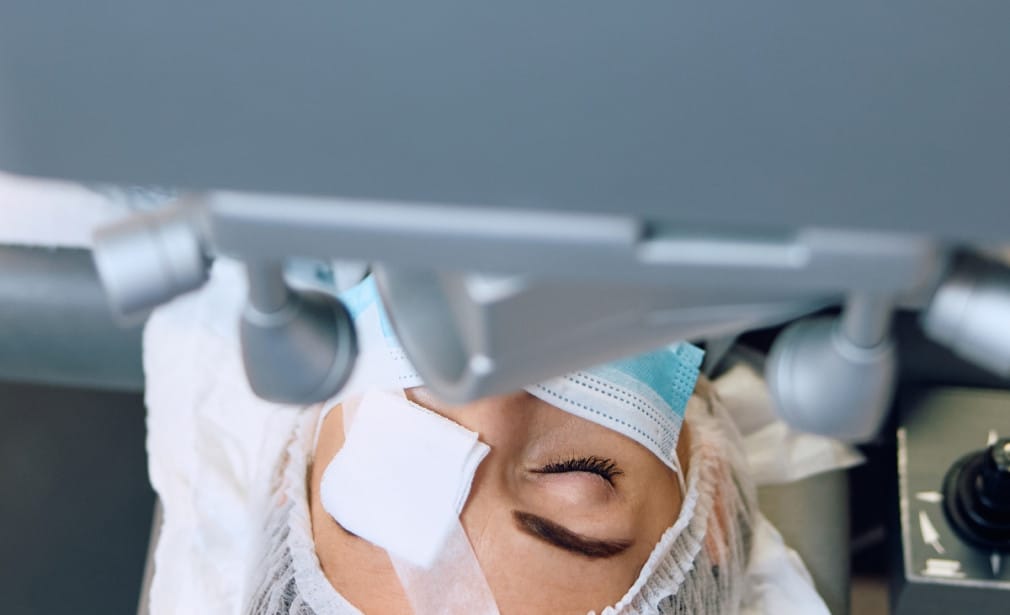
Laser Treatments
Laser Treatments: Innovations in Eye Care and Aesthetic Procedures
Laser treatments have revolutionized medicine by offering precise, minimally invasive solutions for a wide range of eye conditions and cosmetic concerns. Lasers can be used for corrective eye surgeries, treatment of eye diseases, and cosmetic enhancements. Here is an overview of different laser treatments, their benefits, and what they involve.
1. Corrective Eye Surgeries
Laser eye surgeries are designed to correct refractive errors such as myopia (nearsightedness), hyperopia (farsightedness), and astigmatism by reshaping the cornea to properly focus light onto the retina. Common Corrective Laser Eye Surgeries: LASIK (Laser-Assisted in Situ Keratomileusis):- Description: The most popular laser eye surgery, LASIK involves creating a flap in the cornea, then using an excimer laser to reshape the underlying tissue.
- Benefits: Fast recovery, minimal discomfort, and significant improvement in vision often eliminating the need for glasses or contact lenses.
- Description: Similar to LASIK but without creating a flap. The surface layer of the cornea is removed, and the excimer laser reshapes the corneal tissue.
- Benefits: Suitable for patients with thinner corneas, provides excellent vision correction, though recovery time is longer than LASIK.
- Description: Combines elements of LASIK and PRK; the epithelial layer is loosened with alcohol, moved aside, then the cornea is reshaped with a laser.
- Benefits: A good alternative for patients not suitable for LASIK, offering similar vision correction outcomes.
- Description: A minimally invasive procedure using a femtosecond laser to create a small lenticule (lens-shaped corneal tissue) which is extracted through a tiny incision.
- Benefits: Less invasive than LASIK, rapid recovery, minimal discomfort, and excellent vision correction.
2. Medical Laser Treatments for Eye Diseases
Lasers are also used to treat various eye diseases, providing precise and effective solutions with minimal damage to surrounding tissues. Common Medical Laser Treatments: Laser Photocoagulation:- Description: Used to treat retinal conditions such as diabetic retinopathy and retinal vein occlusion. The laser creates small burns on the retina to seal leaking blood vessels and reduce swelling.
- Benefits: Prevents further vision loss, stabilizes retinal conditions, and can be performed as an outpatient procedure.
- Description: A procedure for patients with narrow-angle glaucoma where a laser creates a small hole in the iris to improve fluid drainage and lower intraocular pressure.
- Benefits: Quick and effective method to prevent or treat acute narrow-angle glaucoma, reducing risk of vision loss.
- Description: Used to treat open-angle glaucoma by applying laser to open clogged drainage channels in the trabecular meshwork.
- Benefits: Lowers intraocular pressure, often delays or eliminates the need for glaucoma medications.
3. Cosmetic Laser Treatments
Laser treatments are widely used in aesthetic medicine to improve skin appearance around the eyes and other areas, addressing wrinkles, pigmentation, and skin laxity. Popular Cosmetic Laser Treatments: Laser Skin Resurfacing:- Description: Uses ablative or non-ablative lasers to remove damaged outer skin layers, promoting new skin growth and collagen production.
- Benefits: Reduces fine lines, wrinkles, scars, and pigmentation issues, resulting in smoother, more youthful-looking skin.
- Description: Targets small fractions of the skin at a time, allowing for faster healing of surrounding tissue.
- Benefits: Improves skin texture and tone, reduces fine lines, and minimizes scars with minimal downtime.
- Description: Uses laser energy to target and destroy hair follicles, reducing unwanted hair growth.
- Benefits: Provides long-lasting hair reduction and is suitable for various body areas including the face.
4. Advanced Laser Technologies
Femtosecond Lasers:- Description: Ultra-fast lasers used in procedures like LASIK and SMILE, offering high precision and minimal tissue disruption.
- Benefits: Increased safety, faster healing, and excellent surgical outcomes.
- Description: Gas lasers used in refractive surgeries (LASIK, PRK) to reshape the cornea with high precision.
- Benefits: Provides accurate vision correction with minimal damage to surrounding tissues.