
Cataracts and Lenses
Cataracts and Lenses: Understanding the Condition and Treatment Options
Cataracts are a common eye disorder characterized by clouding of the eye’s natural lens, leading to reduced vision. This condition is typically associated with aging but can also be caused by trauma, certain medications, and medical conditions such as diabetes.
What Are Cataracts?
Cataracts form when proteins in the eye’s lens begin to break down and clump together, causing cloudy areas. This cloudiness obstructs the passage of light through the lens, resulting in blurred or faded vision. There are several types of cataracts, including:- Nuclear Cataracts: Develop in the center of the lens and can cause the lens to appear yellow or brown.
- Cortical Cataracts: Start at the edges of the lens and progress inward, forming streaks or spokes.
- Posterior Subcapsular Cataracts: Develop at the back of the lens and may cause glare or halos around lights.
Symptoms of Cataracts
- Blurred or cloudy vision
- Difficulty seeing at night
- Sensitivity to light and glare
- Seeing halos around lights
- Frequent changes in eyeglass or contact lens prescriptions
- Fading or yellowing of colors
- Double vision in one eye
Diagnosis and Monitoring
Regular eye examinations are crucial for early detection of cataracts. An eye specialist can diagnose cataracts through various tests, including:- Visual Acuity Test: Measures how well you see at different distances.
- Biomicroscopy (Slit-Lamp Examination): Provides a magnified view of the front structures of your eye.
- Retinal Examination: Allows the doctor to view the back of the eye (retina) and check for other potential issues.
- Tonometry: Measures intraocular pressure.
Treatment Options
In the early stages, mild cataracts can be managed with stronger prescription glasses, improved lighting, and magnifying lenses. However, as cataracts progress and significantly impair vision, surgical intervention is usually recommended.Cataract Surgery
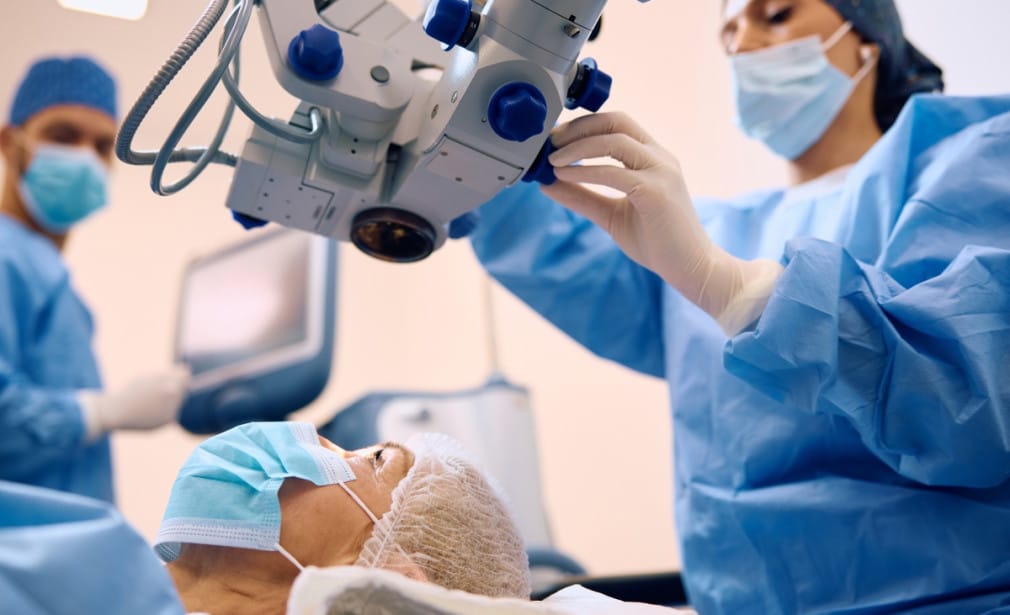
Cataract surgery is one of the most common and effective surgical procedures performed worldwide. The surgery involves removing the clouded lens and replacing it with an artificial lens called an intraocular lens (IOL).- Phacoemulsification: This is the most common cataract surgery method. A small incision is made in the eye, and an ultrasound device is used to break up the cloudy lens, which is then removed. An IOL is implanted in its place.
- Extracapsular Cataract Extraction (ECCE): This method is used for dense cataracts that cannot be broken up with ultrasound. A larger incision is made to remove the lens in one piece, followed by implantation of an IOL.
Types of Intraocular Lenses (IOLs)
Various IOLs are available to meet different vision needs. The choice of IOL depends on factors such as lifestyle, eye health, and specific visual requirements.- Monofocal IOLs: These lenses provide clear vision at one distance (near, intermediate, or far). Most people with monofocal IOLs will still need glasses for other distances.
- Multifocal IOLs: Designed to provide clear vision at multiple distances and potentially reduce the need for glasses.
- Toric IOLs: These lenses correct astigmatism as well as provide clear vision at one distance.
- Accommodative IOLs: These lenses move within the eye to mimic the eye’s natural focusing ability, providing clear vision at multiple distances.
Recovery from Cataract Surgery
Recovery from cataract surgery is generally quick, with most people experiencing significant vision improvement within a few days. However, complete healing can take several weeks. Postoperative care includes:- Using prescribed eye drops to prevent infection and inflammation
- Avoiding heavy lifting and strenuous activities for several weeks
- Wearing protective eyewear to shield eyes from dust and debris
- Attending follow-up appointments to monitor healing
Preventing and Managing Cataracts
While it may not always be possible to prevent cataracts, certain lifestyle changes can slow their progression and help manage symptoms effectively:- Regular Eye Exams: Early detection helps manage cataracts before they worsen.
- Healthy Nutrition: A diet rich in antioxidants such as vitamins C and E may protect the eyes from cataract development.
- UV Protection: Wearing sunglasses that block UV rays can prevent sun-related eye damage.
- Quit Smoking: Smoking increases the risk of cataracts and quitting is highly recommended.